
"coffee sorting process"
800 article(s) found

Brief introduction of coffee producing country Brazil what are the advantages and disadvantages of historical strip picking of Brazilian coffee beans?
Brazil country profile: area-8515770 square kilometers of the capital-main port city of Brasilia-Port Santos population-205823665 (July 2016) spoken language-Portuguese (official), German, some Spanish, various American Indian languages, English about coffee: the population involved in coffee-about 360000

Basic knowledge of coffee processing and identification of coffee beans
Drying is a method of preparing coffee beans for the roasting process. It is the cheapest, simplest and most traditional processing method of coffee beans. When processing, the harvested fruit should be spread on the cement floor, brick floor or straw mat. Ideally, the fruits should be raked flat in the sun and at regular intervals to prevent fermentation. About four weeks later, each fruit

Rwanda coffee bean flavor taste aroma description what are the characteristics of Rwanda coffee beans?
Professional coffee knowledge exchange more coffee bean information please follow the coffee workshop (Wechat official account cafe_style) Rwanda (Rwanda) coffee varieties, more than 95% are Arabica Bourbon, a small number are Catuai and Kaddura (Caturra). The planting height is between 1200 and 1800 meters above sea level. The flowering period is from September to October every year

Ireta Coffee Manor in Panama introduces the origin of high quality Panamanian coffee bean boutique coffee.
Panamanian coffee the microclimate of the Panamanian highlands is the most important resource that makes Panamanian coffee unique. The most important resource that makes Panamanian coffee unique is its microclimate. The east-west environment of the Republic of Panama allows cold air to flow through the Central Mountains and converge at more than 6500 feet, resulting in a variety of events in the Boquete and Volcn Candela regions.

Panamanian Cupid Coffee Flavor and taste introduction to boutique coffee beans in the manor area
Panama is a small country located in the center of the American continent. The waters of the Atlantic and Pacific oceans flood its beaches. Panama is located at 9 degrees north latitude, the meeting point of the Central Mountains, where Mount Baru, one of the highest volcanoes in Central America, is located. Baru volcano has an altitude of more than 11400 feet, and the land around it is rich in nutritious and fertile soil, which is unique to Panama.

How many treatments are there for Brazilian coffee? Brazilian coffee flavor
The four most common treatment methods of Brazilian coffee are natural solarization, desizing, semi-washing and water washing, among which natural solarization is the most popular. Since the harvest seasons in Brazil's two main producing areas, Serrado Minero (CerradoMineiro) and Mogiana Paulista (Mogiana Paulista), are both dry seasons of the year, natural solarization is popular in this region.

How to operate and manage a coffee shop-four tips for running a coffee shop successfully
Tips for choosing coffee beans Coffee raw beans must be divided

Types and characteristics of Bolivian coffee beans
In the past, coffee trees in Bolivia used to act as hedges and ornaments around the garden. Real commercial production began in the early 1950s. The great frost of 1957 seriously damaged Brazil's coffee industry, while Bolivia (Bolivia) benefited from it and developed rapidly. Bolivian coffee is grown at an altitude of 180,670 meters above sea level.

Why does Bolivian coffee produce so little? Bolivian coffee bean flavor story
Professional coffee knowledge exchange more information about coffee beans Please follow the coffee workshop (Wechat official account cafe_style) if you want to talk about the paradise of coffee bean growth, it is Bolivia. This producing area can be regarded as one of the most recommended boutique coffee producing areas. Most of the coffee beans in this producing area are a little sweet and very pleasing, but the number of coffee beans is very small.

A brief introduction to the Origin, Development, History and Culture of Panamanian Flower Butterfly Fine Coffee beans
Composed of Rosa, Kaddura and Kaduai, it is planted in the Baru volcano region of Pokuit and grows in the volcanic area at an altitude of 1600 meters. the treatment plant adopts fine washing treatment. Panama's special local microclimate leads to abundant rainfall in this area and a large temperature difference between day and night, coupled with the unique volcanic soil of the volcanic area, as well as meticulous harvesting and fine treatment.

A brief introduction to the flavor, taste and aroma characteristics of superior Panamanian butterfly boutique coffee beans
Flower butterfly in the superiority of the variety, coupled with fine treatment, if the use of medium-light baking to complete the final flavor of this bean. You will be able to give this flower butterfly, which has the unique aroma of rose summer, the flavor of Nanyang fruit and raspberry fruit, as well as the sweetness and smoothness of honey, the very long-lasting aroma and finish rhyme, with great certainty, according to the information obtained by consulting.

Common types of coffee have easy access to the names of all kinds of coffee
With the spread of coffee culture, the public is no longer a stranger to coffee, but are you familiar with the names of all kinds of coffee? What is the raw material and preparation process of each kind of coffee? The following is to sort out and draw two lovely pictures to give you a deep understanding of the types of coffee. The next time you go to a cafe or buy a coffee drink, you'll know how to tell the difference. Espresso

History of coffee in Rwanda
The Rwandans of origin have been growing coffee since colonial times, but until 1999, its products were still classified as below Class C and were not popular in the global market. The reason for the poor quality is that farmers do not have a fixed procedure for washing coffee beans and do not process coffee fruits according to specifications in time. Buyers buy coffee beans at $0.33 per kilogram, and farmers rely on the meagre profits earned at low prices.

Brazilian Green Coffee Processing Craft Coffee Green Coffee Merchant American Fine Coffee
The four most common treatments for Brazilian coffee are sun, desizing, half-washing and washing, with sun being the most popular. Since the harvest seasons of Cerrado Mineiro and Mogiana Paulista, Brazil's two main producing areas, are both dry seasons of the year, natural solarization is common in this area.

Processing Technology of Brazilian Coffee Raw beans semi-washing Commercial Coffee Bean Italian blending Formula
Boutique coffee is fresh coffee. Whether it's food or drink, of course, the fresh the better, and so is boutique coffee. High-quality coffee should keep the coffee beans fresh before making, including the preservation of baked beans, and grind the coffee beans into powder before making, which is also to retain its original and best flavor. And the way of making hand-made coffee is such a way to make high-quality coffee.

Is Kenya Nigoo Coffee good? Kenya Ngugu Coffee processing Plant _ what kind of coffee is good in Kenya?
For more information on coffee beans, please follow Coffee Workshop (Wechat official account cafe_style) Ngugu- Kenya this coffee is produced by many small farmers, all of whom are members of the Kibirigwi Farmers' Cooperative Association (FCS) located in Kirinyaga County, Kenya. The cooperative has nine wet mills (factories because they know it in Kenya), each
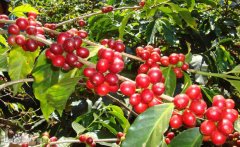
Brazilian coffee green beans processing technology American coffee beans honey processing commercial Brazilian beans green beans
The four most common treatments for Brazilian coffee are sun, desizing, half-washing and washing, with sun being the most popular. Since the harvest seasons of Cerrado Mineiro and Mogiana Paulista, Brazil's two main producing areas, are both dry seasons of the year, natural solarization is common in this area.
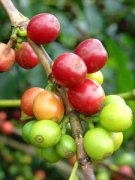
Brazilian coffee beans processing Brazilian coffee green beans wholesale coffee beans American coffee beans
The four most common treatments for Brazilian coffee are sun, desizing, half-washing and washing, with sun being the most popular. Since the harvest seasons of Cerrado Mineiro and Mogiana Paulista, Brazil's two main producing areas, are both dry seasons of the year, natural solarization is common in this area.

Introduction to the characteristics of varieties in Costa Rican Coffee growing Environment and Flavor description
One of the most famous is Mountain Costa Rica Coffee, which tastes mellow and neutral. It can be boiled directly or mixed with other kinds of coffee beans to form a mixed coffee. It is also a good choice. Other kinds of Brazilian coffee, such as Rio and Parana, can be produced in large quantities because they do not need too much care. Although they taste rough, they can be regarded as a kind of coffee with good quality and low price.

Introduction to the characteristics of Panamanian Cupid Coffee Flavor description and Grinding degree treatment
The Panamanian flag was launched on November 3, 1904. The flag is rectangular and the ratio of length to width is 3:2. The flag consists of four rectangles of white, red and blue. White symbolizes peace; red and blue represent the former Panamanian Liberal Party and the Conservative Party respectively, and they are also symbols of the two parties' United struggle for the interests of the nation. The blue star on the white background on the upper left represents loyalty and integrity, and the red star on the white background on the lower right represents